Be yourself; Everyone else is already taken.
— Oscar Wilde.
This is the first post on my new blog. I’m just getting this new blog going, so stay tuned for more. Subscribe below to get notified when I post new updates.
music is not to listen it is to feel
Be yourself; Everyone else is already taken.
— Oscar Wilde.
This is the first post on my new blog. I’m just getting this new blog going, so stay tuned for more. Subscribe below to get notified when I post new updates.
Name: punam Ravindra mali
Email: punammali2018gmail.com
Contact No.: 7796495325
Course: B.Tech
Branch: Computer Engineering
Seeking for responsible position in a progressive organization that gives scope to enhance my knowledge, skills and innovative ideas to develop myself in an organization.
| Year | Institute | Board/University | Examination | Percentage |
|---|---|---|---|---|
| 2021 | R.C.Patel Instituteof Technology, Shirpur | DBATU,Lonere | T.Y.BTech | 8.80CGPA |
| 2018 | H.R.Patel jr. College, Shirpur | Nashik | HSC | 82.16% |
| 2016 | smita patil public school,dahiwad | Nashik | SSC | 83.6% |
| Skills | Quick Learner, Punctuality,Smartworker |
| Hobbies | Reading Books,Singing |
| Languages | English, Hindi,Marathi |
| Date of Birth | 7 july 2000 |
| Address | sant sauta chauk warvade, Shirpur, Dist- Dhule, Maharashtra 425405 |
I here by declare that all the details furnished above are true and correct to the best of my knowledge and belief, Supporting documents shall be available on request.

The guitar is a fretted musical instrument that typically has six strings. It is held flat against the player’s body and played by strumming or plucking the strings with the dominant hand, while simultaneously pressing selected strings against frets with the fingers of the opposite hand. A plectrum or individual finger picks may be used to strike the strings.
ORIGIN:
Before the development of the electric guitarand the use of synthetic materials, a guitar was defined as being an instrument having “a long, fretted neck, flat wooden soundboard, ribs, and a flat back, most often with incurved sides.”The term is used to refer to a number of chordophones that were developed and used across Europe, beginning in the 12th century and, later, in the Americas.A 3,300-year-old stone carving of a Hittite bard playing a stringed instrument is the oldest iconographic representation of a chordophone and clay plaques from Babylonia show people playing an instrument that has a strong resemblance to the guitar, indicating a possible Babylonian origin for the guitar.
TYPES:
Guitars can be divided into two broad categories, acoustic and electric guitars. Within each of these categories, there are also further sub-categories. For example, an electric guitar can be purchased in a six-string model (the most common model) or in seven- or twelve-string models.
ACOUSTIC:
Acoustic guitars form several notable subcategories within the acoustic guitar group: classical and flemenco guitar; steel-string guitars, which include the flat-topped, or “folk”, guitar; twelve-string guitars; and the arched-top guitar. The acoustic guitar group also includes unamplified guitars designed to play in different registers, such as the acoustic bass guitar, which has a similar tuning to that of the electric bass guitar.
ELECTRIC:
Electric guitars can have solid, semi-hollow, or hollow bodies; solid bodies produce little sound without amplification. In contrast to a standard acoustic guitar, electric guitars instead rely on electromagnetic pickups, and sometimes piezoelectric pickups, that convert the vibration of the steel strings into signals, which are fed to an amplifier through a patch cable or radio transmitter. The sound is frequently modified by other electronic devices (effects units) or the natural distortionof valves (vaccum tubes) or the pre-amp in the amplifier.
HOW TO PLAY:
STEP1: Identify the parts of the guitar. Whether you’re playing an electric or an acoustic guitar, the instrument is essentially wood and metal. Copper-wound strings vibrate to create sound. The wooden body resonates that sound to create the warm tones we associate with a guitar.
STEP2:
Hold the guitar correctly. Before you start wailing like Hendrix, make sure you’re holding your guitar correctly. If you’re right handed, you’ll play the guitar by strumming about halfway between the sound hole and the bridge with your right hand and fretting the strings on the neck with your left hand.
STEP3:
Tune the guitar. It’s no fun to play a guitar that’s not in tune and can lead to some bad habits when you’re first starting out. Tuning regularly will also familiarize you with which string and fret combinations correspond with which notes.
STEP4:
Practice fretting the strings. The frets are the metal strips that run perpendicular to the strings that mark each note. To play a note, press your finger down between the metal strips, not on them. To say that you’re playing the third fret means that you place your finger on the string in the gap between the second and third fret. If you hear buzzing, move your finger away from the lowest fret and closer to the higher fret. Hold the string down firmly so that it only vibrates between your finger and your strumming hand, with the tip of your finger doing the pressing.
STEP5:
Hold the pick. A pick, or plectrum, is a small tear-shaped piece of plastic used for picking out individual notes and strumming the guitar. They’re cheap and available at any music retailer. While it’s not essential to learn to play guitar with a pick, it’s most generally the way to start.
STEP6:
Learn first position chords. A chord is a harmonic group of at least three notes. For beginning guitar, there are two basic chord types: first position chords, and barre chords. First position chords can be played with a combination of open strings and pressed strings in the first three frets of the guitar.
step7
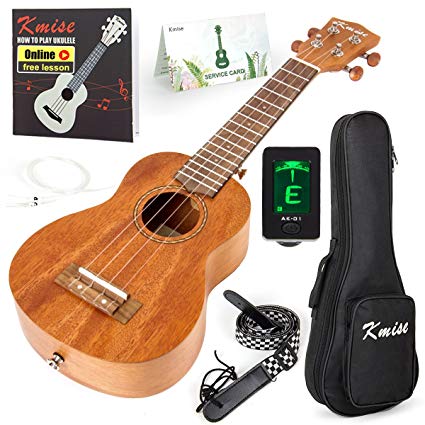
learn finder placement for chords. The finger placement is as follows (first major, then minor):
This is an example post, originally published as part of Blogging University. Enroll in one of our ten programs, and start your blog right.
You’re going to publish a post today. Don’t worry about how your blog looks. Don’t worry if you haven’t given it a name yet, or you’re feeling overwhelmed. Just click the “New Post” button, and tell us why you’re here.
Why do this?
The post can be short or long, a personal intro to your life or a bloggy mission statement, a manifesto for the future or a simple outline of your the types of things you hope to publish.
To help you get started, here are a few questions:
You’re not locked into any of this; one of the wonderful things about blogs is how they constantly evolve as we learn, grow, and interact with one another — but it’s good to know where and why you started, and articulating your goals may just give you a few other post ideas.
Can’t think how to get started? Just write the first thing that pops into your head. Anne Lamott, author of a book on writing we love, says that you need to give yourself permission to write a “crappy first draft”. Anne makes a great point — just start writing, and worry about editing it later.
When you’re ready to publish, give your post three to five tags that describe your blog’s focus — writing, photography, fiction, parenting, food, cars, movies, sports, whatever. These tags will help others who care about your topics find you in the Reader. Make sure one of the tags is “zerotohero,” so other new bloggers can find you, too.
 musicalinstrument